This is a subtitle for your new post
The car does not make much noise on the highway, but every little road crack produces a sharp clunk. It sounds like something is loose directly under the front seats or behind one wheel. You have already checked the trunk, and the noise is still there.
Light, repeated bumps are particularly good at exposing worn suspension joints.
Worn Sway Bar Links and Bushings Cause Small-Bump Clunks
A sway bar helps control body roll during turns. Short links connect it to suspension components, while bushings hold the main bar to the vehicle. When a link joint becomes loose, or a bushing wears, small changes in suspension movement make the hardware tap or knock.
These noises are particularly common on patched pavement and short, repeated bumps. You sometimes hear a light metallic rattle at low speed that disappears on a straight, even road. A worn link often looks unremarkable until it's checked for movement under the right conditions. We inspect both the links and bar mounting bushings because replacing one while ignoring a loose bracket often leaves the same noise behind.
Strut Mount Noise From the Top of the Suspension
On many vehicles, the upper strut mount holds the suspension assembly to the body. It has to manage road impacts while helping the suspension move as designed. A worn mount, bearing, or damaged mounting component creates a clunk near the top of the wheel opening.
Sometimes the noise gets louder when you turn and cross a bump at the same time. You notice a popping sensation as the steering wheel moves or a knock as the car settles after a driveway entrance. The strut itself still has acceptable damping, so replacing the entire assembly without checking the mount can add unnecessary cost. We look for play, damaged rubber, loose fasteners, and related spring concerns.
Notice exactly when the clunk happens on your usual route:
- One wheel crossing a shallow pothole
- Driving over closely spaced road cracks
- Turning into a sloped driveway
- Braking lightly on rough pavement
- Driving straight over a speed bump
We use that information during the road test rather than guessing based on the sound alone.
Bad Control Arm Bushings and Ball Joint Clunks
Control arms help locate the wheels as the suspension moves. Their bushings absorb controlled movement, and ball joints allow steering or suspension articulation where required. When rubber splits or a joint develops looseness, the wheel shifts slightly and makes a dull clunk as the load changes.
The sound may occur during braking, acceleration, or when driving over small bumps, as each action changes the forces on the suspension. A worn ball joint should be given special attention since certain failures can affect wheel retention or steering control. If the car has begun to wander, shows uneven tire wear, or produces a heavy knocking sound along with the noise, it's important not to dismiss it as a minor issue. An inspection is necessary to prevent driving risks.
Steering Tie Rod Wear and Front-End Knocking
Tie rod ends, steering rack mounts, and other steering connections often develop play that becomes noticeable over uneven pavement. You hear a knock and feel a small tap through the steering wheel at the same time. The car starts needing small steering corrections to stay in a straight line or feels less precise than before.
Those clues are different from a purely cosmetic interior rattle. We check steering connections and wheel movement rather than focusing only on whichever corner seems noisy. A steering component that's loose enough to clunk should be addressed promptly. An alignment can't correct mechanical play, so any worn parts need repair before the wheel angles are set.
Loose Brake Hardware and Exhaust Rattles
Not every clunk comes from the suspension. Loose brake pad hardware or a caliper issue can sometimes create a sound as the wheel crosses a bump. A loose heat shield, exhaust hanger, or underbody panel can strike nearby metal. Sometimes the noise stops when you touch the brake pedal lightly, which is a useful clue for brake-related hardware.
A mechanic should still verify the source. A loose exhaust shield sounds as if it's coming from the front suspension, while a worn mount may transmit engine movement through the body. We look for contact marks and check the condition of components near the sound. Replacing sway bar links because they are common doesn't help if the rattle came from a loose caliper bracket.
Why Small Road Bumps Make Suspension Noises Obvious
A large pothole makes almost any vehicle produce some impact noise. Small bumps are different. The suspension moves quickly over short distances, and a loose joint can shift just enough to knock against nearby hardware.
Houston road conditions give those parts plenty of chances to make themselves known. We ask whether the noise appears when braking, turning, accelerating, or driving straight because those conditions load different components. If it began immediately after a wheel impact, we check for bent or damaged parts as well as ordinary wear. A new noise has a history, and that history helps locate it.
How Our Technicians Inspect a Clunking Suspension
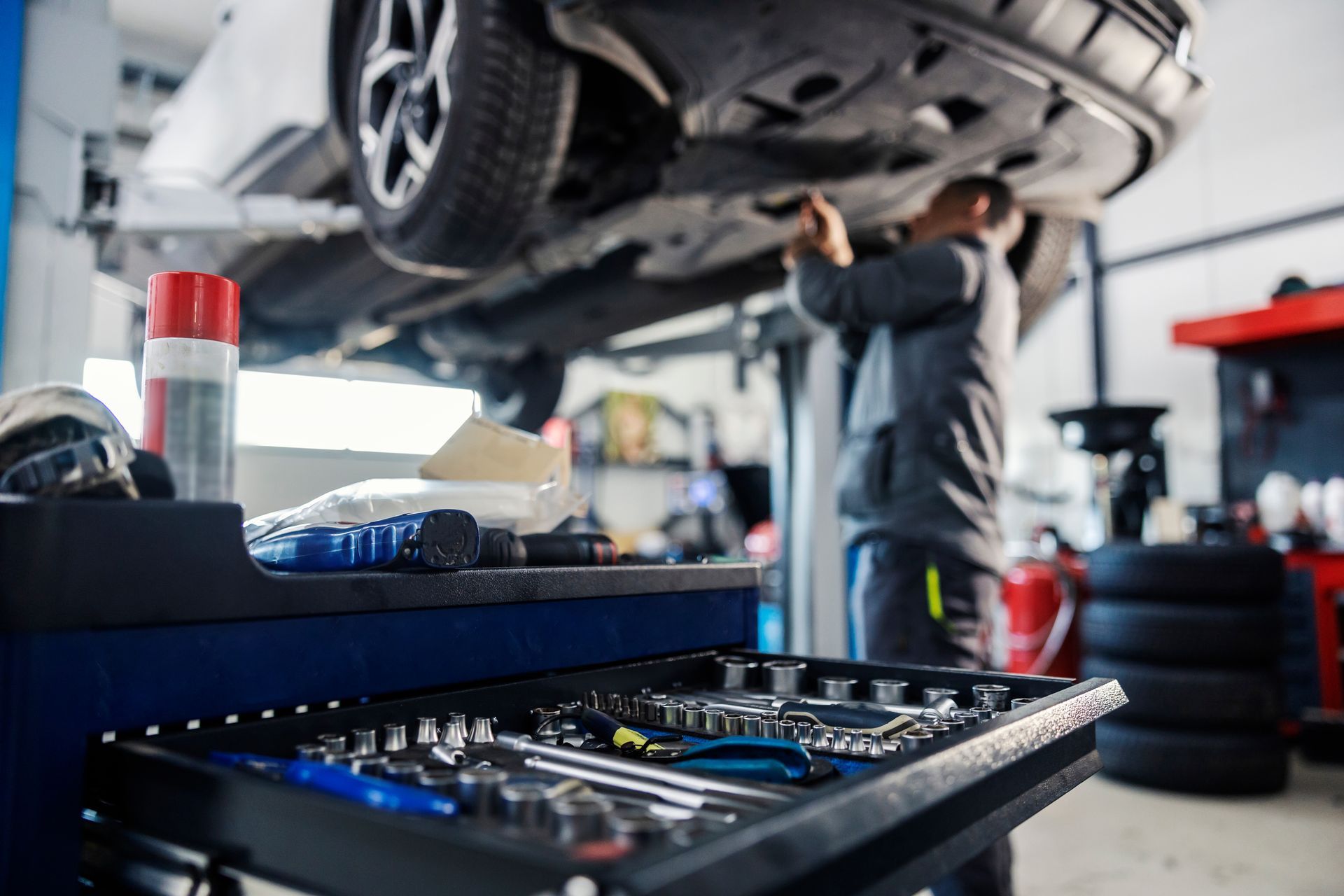
We start with a controlled road test to reproduce the exact bump and driving condition. On the lift, we check links, bushings, strut mounts, ball joints, tie rods, steering attachments, brake hardware, and nearby underbody parts. Some joints need to be tested with the suspension loaded, since hanging wheels temporarily hide movement.
We explain what is loose and whether it affects safety, handling, or primarily noise. A loose sway bar link may need only a straightforward replacement, while a damaged ball joint or steering component calls for much more urgent attention. The key is finding the actual moving part before buying components based on where the sound seems to come from.
Get Suspension Clunk Repair in Houston, TX, With TX Auto Service
TX Auto Service in Houston, TX, checks sway bar links, strut mounts, ball joints, steering joints, and brake hardware when the car clunks over small bumps.
Have the noise located before a loose joint becomes a bigger steering or suspension problem.